
What Gets Measured Gets Managed
Data collection and impact tracking at community clothing exchanges as a way to inspire personal action

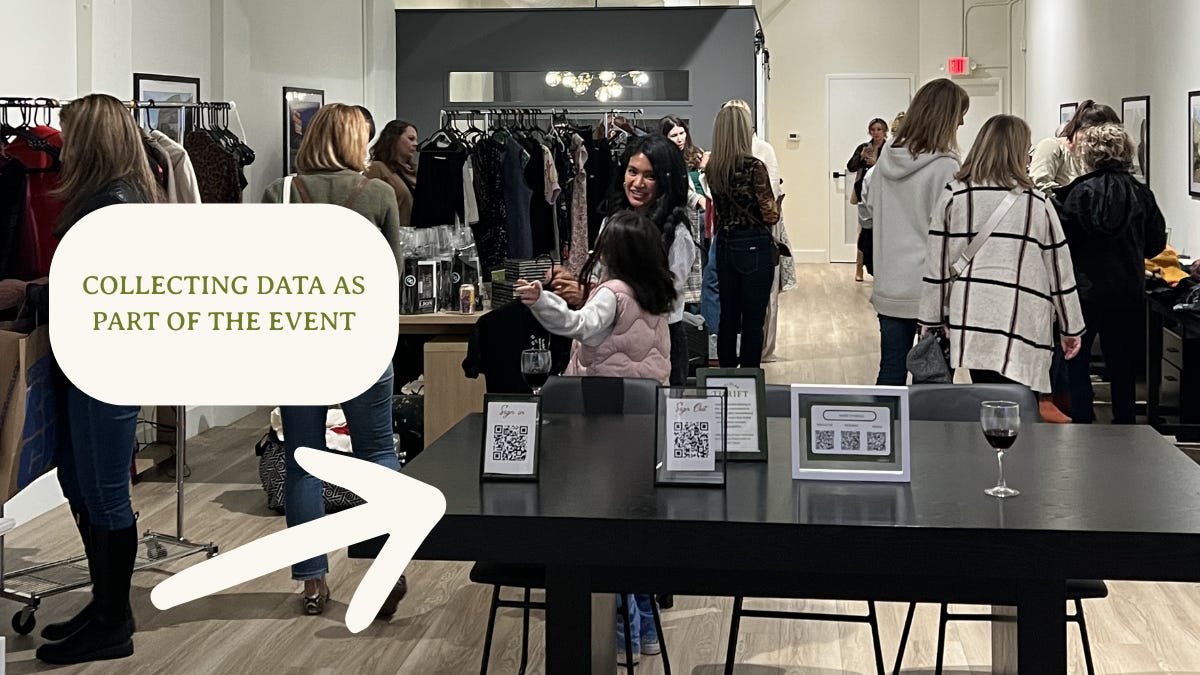
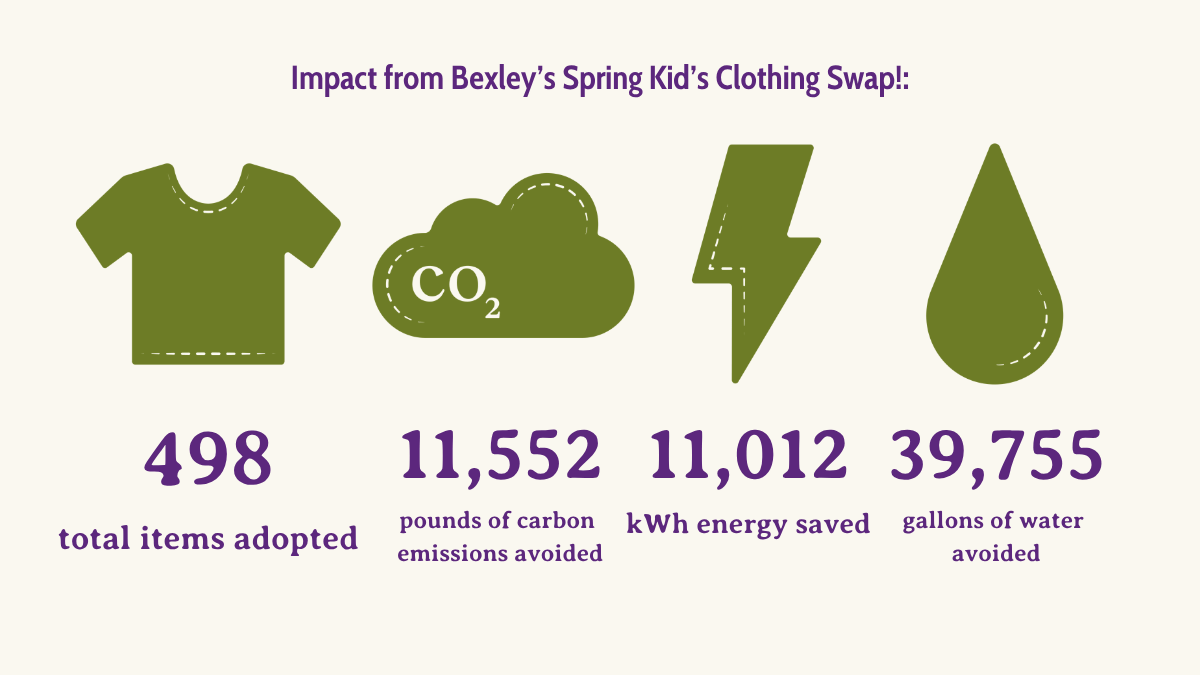
One thing which I started doing early on was to seek to quantify the impact of regular humans’ efforts. I took the data from a white paper I’m going to discuss below, and offered organizers of community clothing exchanges a way to quantify the impact of the event and the effort of the attendees. It might be my favorite part of hosting a community event.
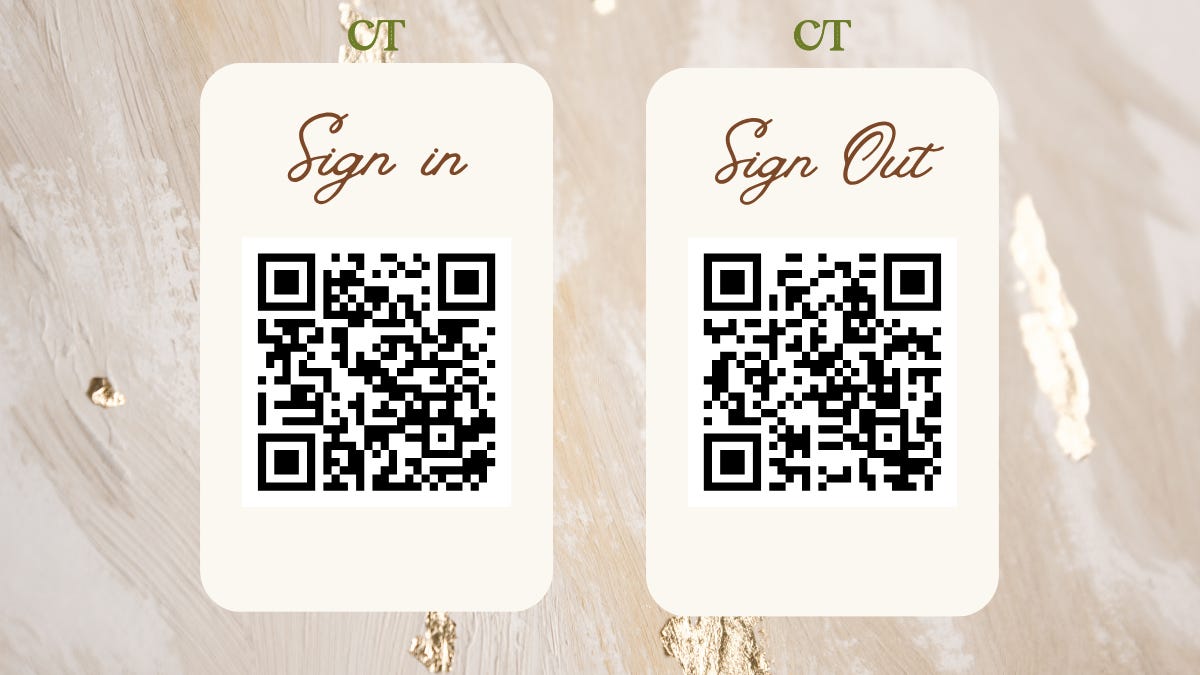
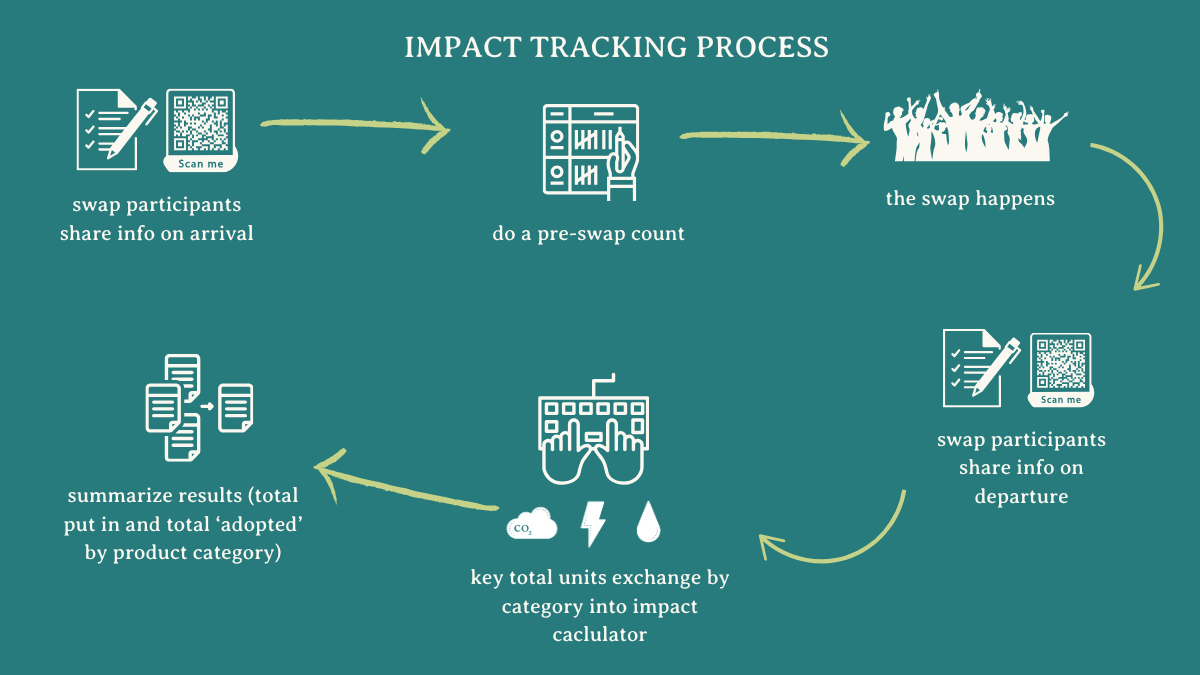
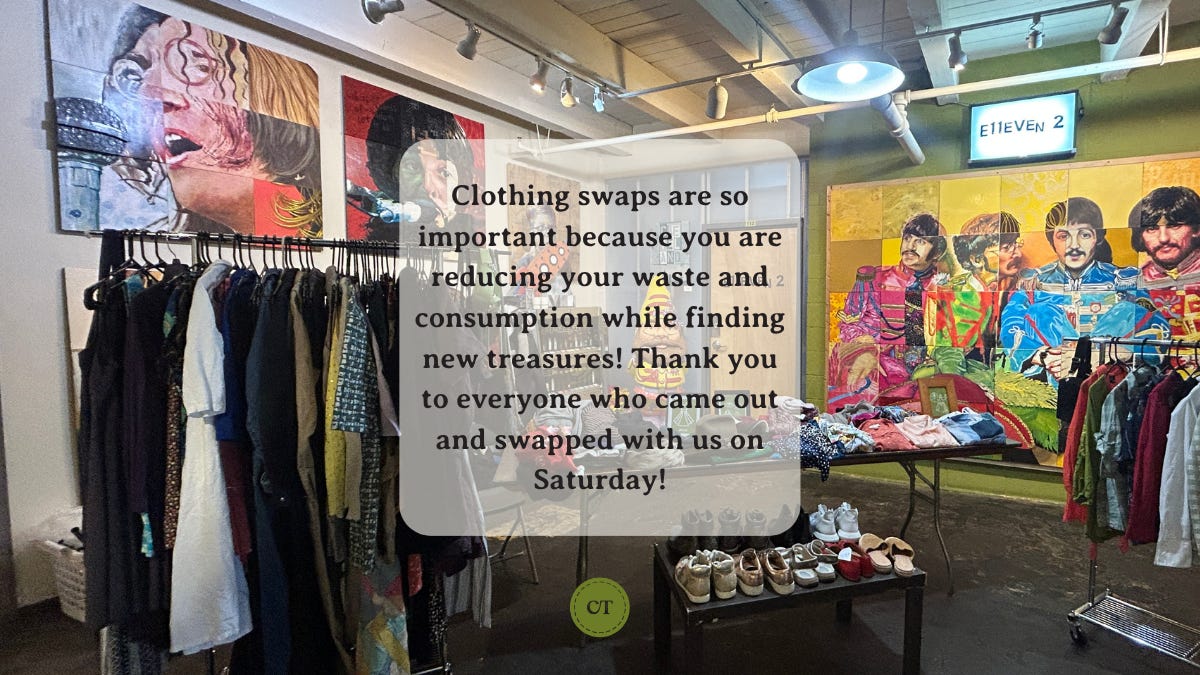
When people come to a clothing exchange I ask them to share, via a google form accessed through a QR code, what they are putting into the exchange and then at the end what they are taking away. It takes people about 90 seconds on each side of an event. Following the exchange I then aggregate the information and share an impact report through social media or via email. I am not claiming that this is bullet proof in being statistically supportable, but it is something. It catches people’s attention and hopefully compels them to think differently about consumption or about the impact of consumption when buying something brand new.
I am gloriously, nerdishly obsessed with a paper written by Green Story, sponsored by the online thrift store ThredUp. It was first published in 2019. The paper looks at the global movement of all of the highest volume fibers from origin to place of fabric production to place of garment production to point of sale, and estimates the offset in carbon emission, water, and energy resulting from re-use to replace a new purchase. A 2022 revision reflected a deeper effort, based on consumer interviews, to further understand use by product category and to quantify the water pollution offset of reduced garment production. As a former sourcing person I LOVE how comprehensive this paper is. I’ve had a string of amazing interns help me over the years and the first thing I have asked each of them to do is read this paper.
Estimating the impact of individual choice and action can serve as an antidote to the feeling of helplessness we can all experience. It is easy to feel morose when considering personal action as a way to drive change when it is so hard to know if what we do as individuals matters even a little. I get it.
When doing research and interviews for our upcoming film we have talked a lot about the ‘birth’ of the recycling industry and how unfair it is that all of the responsibility and work to recycle rests with the consumer rather than with the producer of the single use item. I feel this and I agree that systems change is needed so that fewer single use items are produced. Signing out a loaner cup or remembering to take your own cup when you venture out can evolve to be ‘normal’. Quantifying the significance of a shift in consumer behavior can be a powerful catalyst of it.
Think about things we do or don’t do now which were not a thing a decade ago. Smoking for one. Working remotely. Think about the change in human behavior which resulted from the pandemic. We think and speak differently about our time, our mental health, our connection with family members. A significant change in thinking and in human behavior is possible. It rarely happens when driven by a message of guilt. It sometimes happens when a law is passed. So back to why I love this article. On page 43 of the report from 2019 one can find a research-supported estimate of the offset of a pre-owned garment in place of a new one, broken down by product category.
When a parent uses our QR code to log that they took home a pre-owned winter coat instead of buying a new one, Page 43 tells us they just saved 163.15 gallons of water and offset 395.29 pounds of CO2. Suddenly, a chaotic community swap feels like a collective environmental rescue mission.
Whether it's that winter coat or a pre-owned sweater, I now have a tangible sense of the environmental impact of that personal choice.
One thing which I wish I had embraced much earlier in my career - ‘what gets measured gets managed’. It sounds trite, and maybe reading that phrase you feel like you need to own a plastic pen protector or a belt clip for your palm pilot. I love that page 43 of this paper offers a way for one person to quantify the impact of something they do.
If you need something or love something and a pre-owned option is not feasible then you should probably buy it. But it should be intentional.
We will not change the world by increasing the amount of anxiety that people feel. We will not change the world by pretending that adornment is unimportant. We might change it by offering people a sense of community and something tangible to measure their efforts to do something a little good.
Prepare yourself a snack and a beverage. Download and read this paper. Be the change you wish to see in the world.

Below the paywall are the impact calculation templates and other tools which you can use at your event.
