
Kids Clothing Exchanges
Parental sleep deprivation, the allure of the clean laundry basket, and leaning in on convenience

Following my first clothing exchange effort in January of 2023, I scheduled a series of recurring exchanges for my community of 14,000 people and 4000 households. For the next two years I was in ‘test and learn’ mode, wanting to see what resonated most and why. I learned a more about labor and also about customer segmentation. My experiences also helped me to hone my mission.

I recall returning home with my first child who will be 21 this month. Looking at him together with my husband we felt SO proud and filled with love. We did it! We had a baby! Awesome! Then slowly the reality of what was happening began to dawn on us. This was 24 /7. This was an exhausting non stop effort. Other than my 12 weeks of maternity leave we were both working full time and we were absolutely and deliriously spent. What Zach was dressed in for the first year or so more likely was pulled right from the clean laundry basket than from our drawer of size and season appropriate inventory.
SO much clothing we had purchased or received as a gift went unworn and by the time some bizarre nesting energy boost caused me to cheerfully ‘organize’ my kids’ clothing there was a huge box of new stuff which we had missed the opportunity to use. We received way too much clothing for the first 18 months of life, but then sometimes we found ourselves at Target at 7pm on a Sunday buying new stuff because we abruptly realized that now it was cold he didn’t have pants or long sleeved shirts that fit and we were about to start another work week with zero time for laundry or (are you kidding?) outfit planning. I thought about how to apply my lived experience to exchanges specifically for kids clothing.
I wanted to make people feel ‘bought in’ to the idea that this was a recurring event. Something they could plan for and return to every season. A solution both to the creation after a mad naptime nest cleanng of bags of stuff I wanted 'out’ and the avoidable ‘last minute’ panic purchase 5 sets of some size and product combo I urgently needed.
I came up with the idea of tokens. I ordered a bunch of butterfly shaped wooden buttons from Amazon (you know something which someone nefarious could never duplicate, ha!) and let people know that if they didn’t find what they wanted at an exchange they attended they could bring their tokens back and use them at a future event. This seemed like a great way to build trust and community. I also experimented with written receipts. I would carefully count (or accept the reported count) of what people were placing into an exchange and then write a personalized note. I loved the connection which I thought this would build with people who would come over and over.
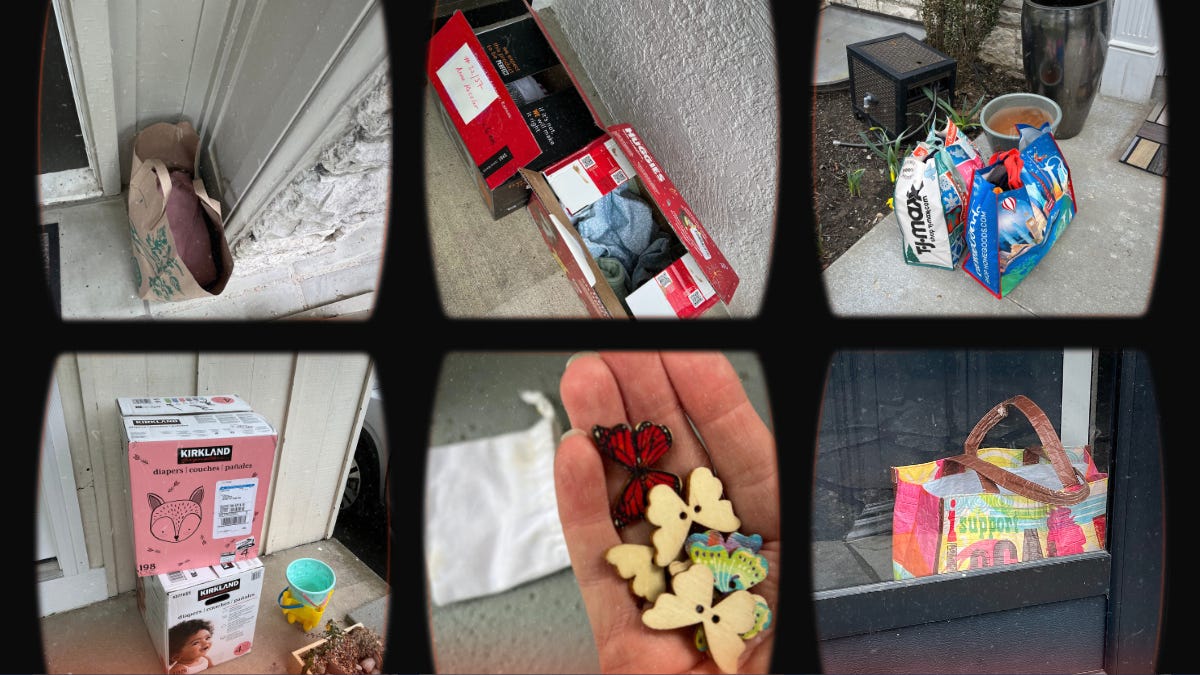
I thought more about convenience, especially among parents of young children who likely worked outside of the home and might appreciate having their clothing exchange items picked up from their front door instead of having to carry these items to the venue on the day of the event. I also thought that it would make the experience more streamlined if joiners did not have to take time (especially if they had young kids in tow) to place what they brought out onto the organized tables at the beginning of the exchange.
With the sign-up communication (either within the evite or in a separate social media post or story) I offered a sign-up genius. Participants could arrange a time for me to stop by their front door and retrieve what they were putting into the exchange. I would show up with my bike and bike trailer (weather permitting) collect what they had left out, and leave them with either a cute little packet of wooden butterfly tokens or a craft paper receipt which they could bring with them to the swap as currency. We also offered for parents to drop off their swap items at school drop-off in the morning and afternoon a few times in the weeks leading up to the exchange.
People availed themselves of this service. I was right that people appreciated the convenience. I don’t think there was a single time when a parent signed up and failed to leave their bags outside for pick-up as scheduled. Sometimes people were home and I loved that I had the chance to connect with them as part of the process. I loved these afternoons when I had 3 pick-ups back to back and rode through my neighborhood like a little clothing nymph. I mean a sweaty middle aged one.
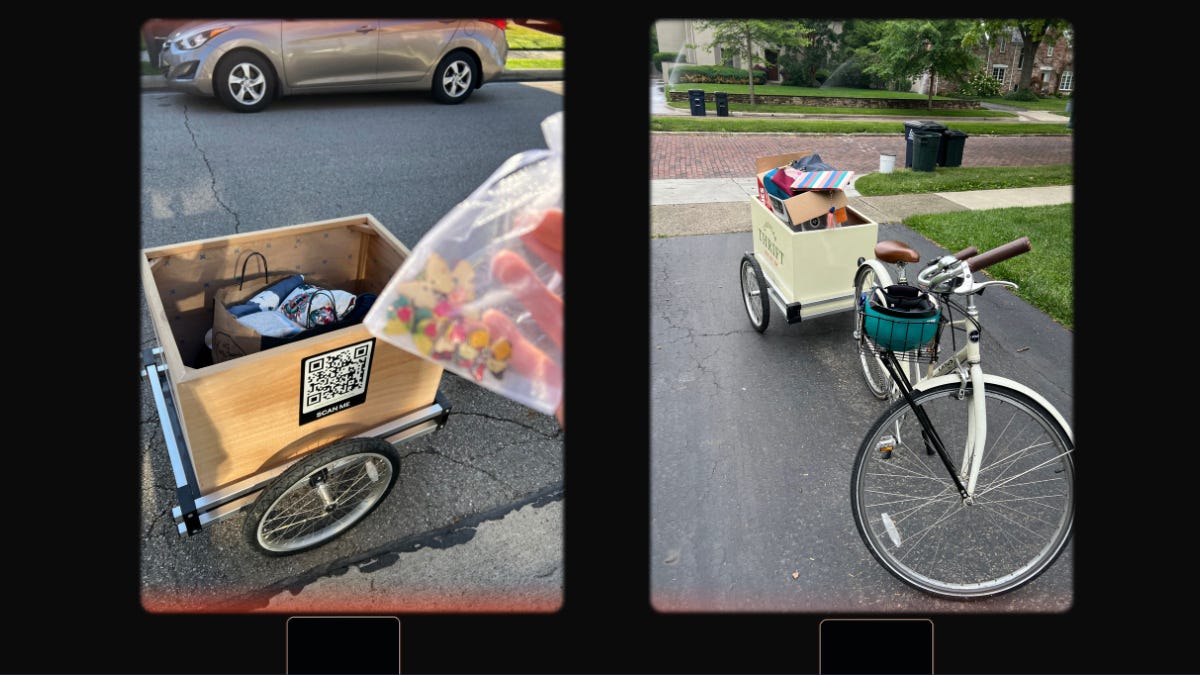
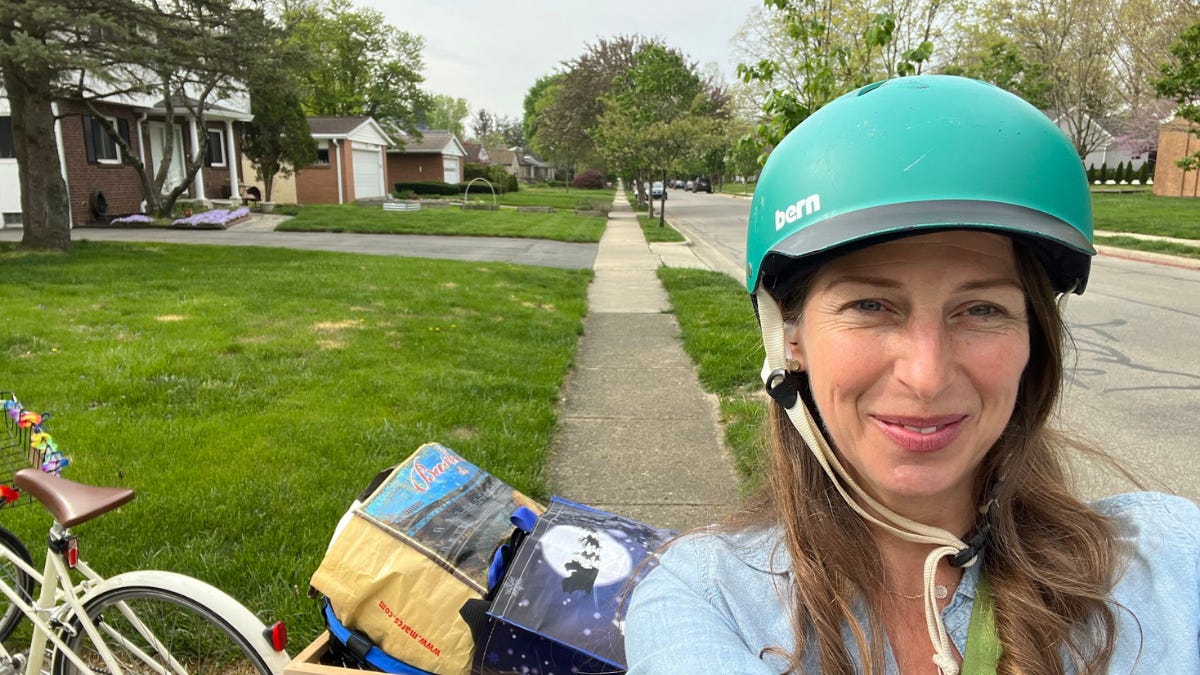
I would take home what I collected and store it in my garage which had been fully cleared and dedicated to sorting. An impressive amount of inventory would accrue. About 2 days before the exchange I would, with the help of a few volunteers, go through every single bag or stack or box of exchange items and organize them by category and within that by size range. This was an opportunity to audit clothing and to remove anything which was soiled or worn out. Almost 100% of what people chose to include in an exchange was totally fine quality wise. On the day of the event I would then pack up my car and haul these boxes to the venue. It took about an hour to transport and then unpack the collected items, this usually with the help of several volunteers. The room looked lovely by the time the first participants appeared.
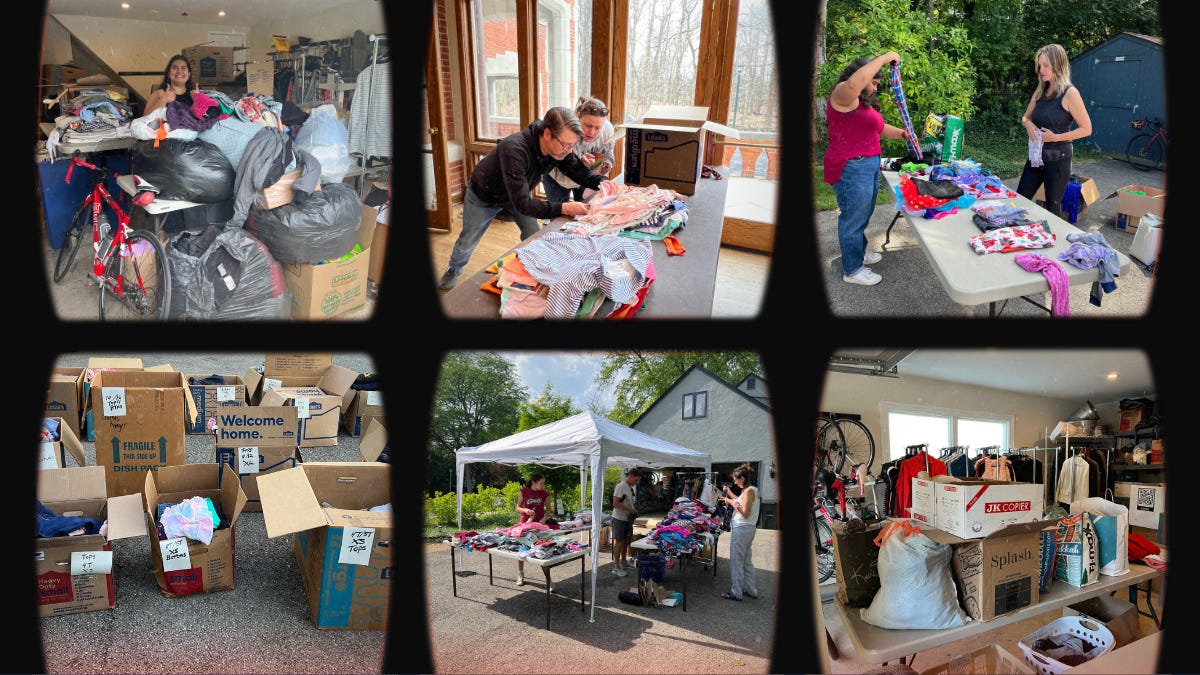
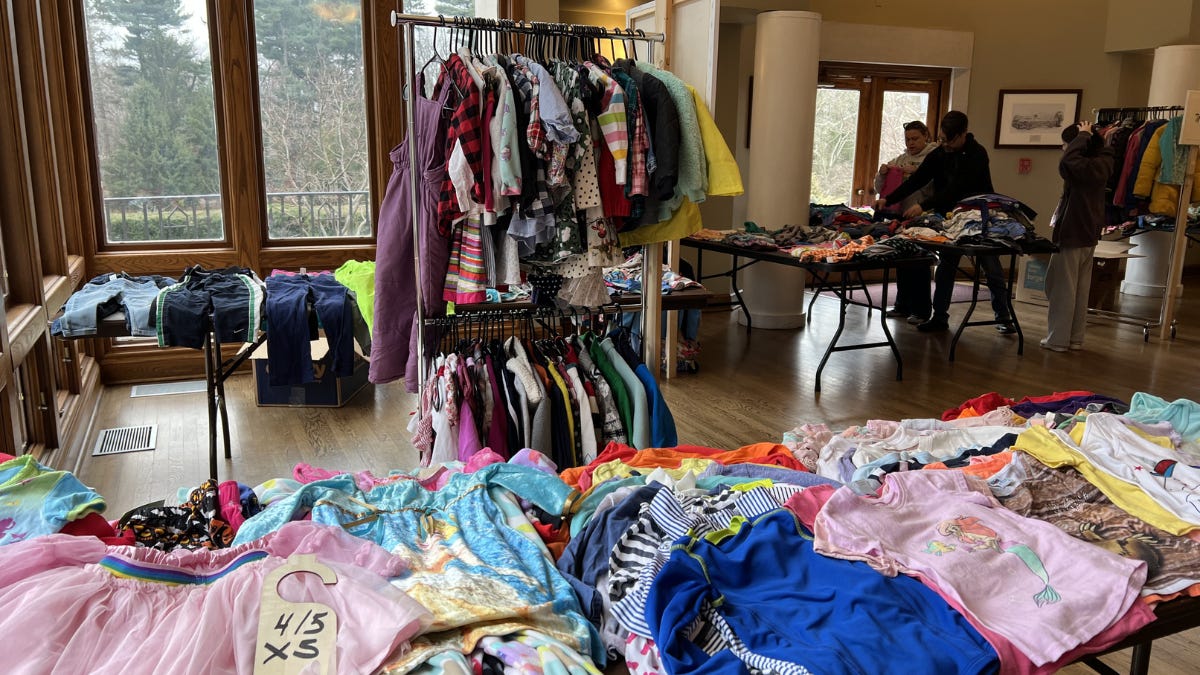
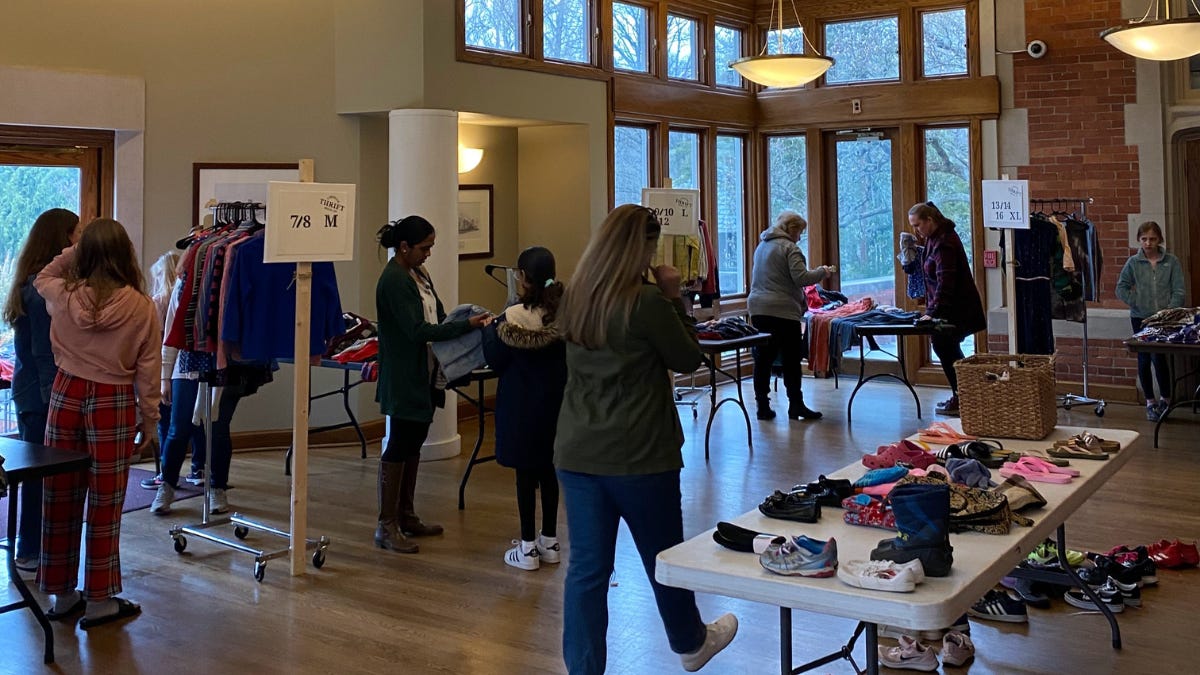
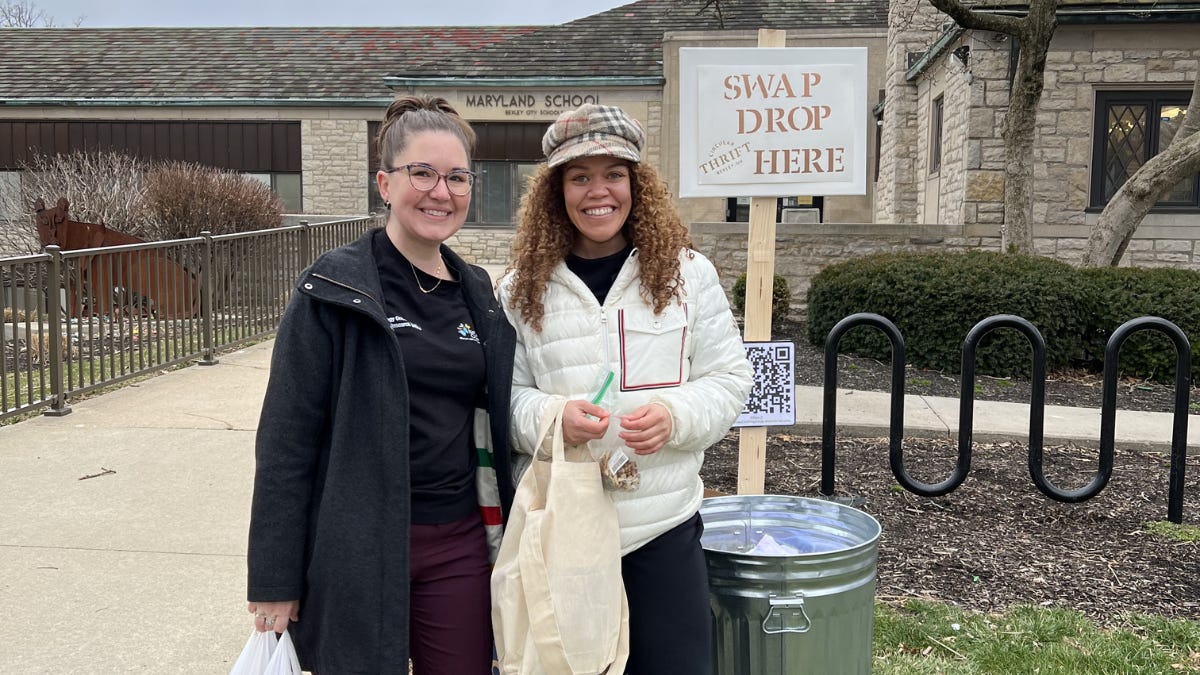
38% - This number has been recurring in my analysis since almost the beginning. If 1000 items are placed into a community exchange, just under 400 are adopted at the event (presumably replacing the purchase of something new) and the balance remains in the possession of the organizer. For kids exchanges I learned to arrange ahead of the event to offer what was left over to an organization serving the local community. In my case this was a school which had a high percent of families who were SNAP (Supplemental Nutrition Assistance Program) eligible, the correlation there being that this parent segment could likely use good quality, clean, organized, free kids clothing.
Hindsight of this hyper local hyper convenient model:
Evaluate Labor vs Convenience - Door collection worked great but it was a lot of work. I was exhausted by the time an event occurred. The labor involved to orchestrate this extremely convenient exchange was too much for one person. I think it could work for a few engaged volunteers (some kind of committee) who are affiliated with the elementary school or the city.
Volume Dynamics - I can not support this with robust data, but I believe that the amount of clothing which I collected for an event when I did offer front door pick up was higher. One would need to evaluate one’s goals to determine if this is a viable model or not. If you are affiliated with an organization that needs clothing, then door pick up is a very good option. If your goal is to host a community exchange and to be efficient with your time then I would NOT recommend offering this service.
Involve High School Clubs - One idea I’ve had is that a high school environmental club could take on the work of a recurring kids clothing exchange. They could charge something for door pick up which goes to a school organization of some kind, and establish a long term relationship with a sister school, a church, or other organization who consistently needs kids stuff.
Abandon the Token System - I count this as among my worst experiments. What ended up happening was that people would bring ALL of the stuff their kids had grown out of, primarily lower value items (think 20 onesies for a 9 month old) and happily trade them in for swim wear for a 2 year old and a cute dresses for an 18 month old. The fact that they were allowed to accrue tokens or receipt balances meant that they could come without anything at a following event and cherry pick the best items from another event. I have only respect for the participants who did this. I set it up this way. They followed the rules. Good for them for finding what they needed without having to spend any money. But the model was not financially sustainable because SO much labor was needed to facilitate this, and I did not find that participants were willing to pay extra for this service. Whether this last statement is true or not is worth some additional investigation.
I strongly recommend a ‘one and done’ event solution. If people don’t find what they want now, they will find it somewhere else.
This is because THERE IS JUST SO MUCH KIDS CLOTHING. According to data from the UK-based environmental charity Hubbub, the average child outgrows seven sizes of clothing in just their first two years of life. This creates an incredibly rapid, forced cycle of supply and disposal that doesn't exist in adult fashion. A comprehensive study by The Waste and Resources Action Programme (WRAP) found that roughly 183 million pieces of children's clothing are sitting completely unused in closets in a given year.
I once found myself in possession of extra kids clothing (infant to 4T) and contacted a local shelter to see if they would take it. They did ultimately accept it because their inventory at that time was low, but this was IN SPITE of a rule they had that they only accepted NEW kids clothing. If a shelter can successfully operate under the guidelines that only new clothing can be donated this gives a clear picture of how much excess clothing is being produced each year and is just ‘around’. There is so much kids clothing.
I have to admit here that I’m still not exactly sure who my customer was. My goal through Circular Thrift is to create repeatable models that reduce the impact of global clothing production on the environment. This means most of my customers are people who would otherwise be buying new. I do not know if I captured these people through this effort. On the one hand, I believe that people with disposabe income may be more likely to join a clothing swap for kids clothing than for their personal clothing. At these events I have seen dozens of Patagonia and Northface coats change hands. This I believe IS real circular economy stuff. Those parents used that coat instead of buying a new Northface coat that year.
I also wonder if the people I served through this model are already thrifters, and would have shopped at a national charity before going to buy new. If the latter dominates then I can still claim a social impact I suppose. Building community, plus one could argue a positive social impact because recipients of the 62% of remaining clothing hopefully saved a little money or stressed a little less about clothing their kids under financial strain.
Ideas:
Parents - Think in 6 month increments. You need maybe 10 outfits for your newborn. Figure out how not to end up with SO much more than this.
Gift Bestowers - We should all stop giving gifts of an adorable newborn outfit to our friends, our friends kids, etc. Give a consumable gift or a restaurant gift card or a store gift card if you must. At least this way what is being purchased is what a tired parent actually needs at 7pm at Target.
Dy
PTOs and High School Environmental Clubs - Form a committee and organize a spring and fall clothing exchange. Charge something for it and make it a community gathering. Find an organization who NEEDS kids clothing and work with them ahead of time to see what they need, what they don’t need, and how best to get them what their community will use.
I view this as an iterative process. Readers, use this as is helpful. An event planning template is available below the pay wall for this article.
