
Doing is Different: Three Years in the Circular Trenches
From neighborhood trike to academic paper: A look at the mechanics required to build a truly local circular economy.

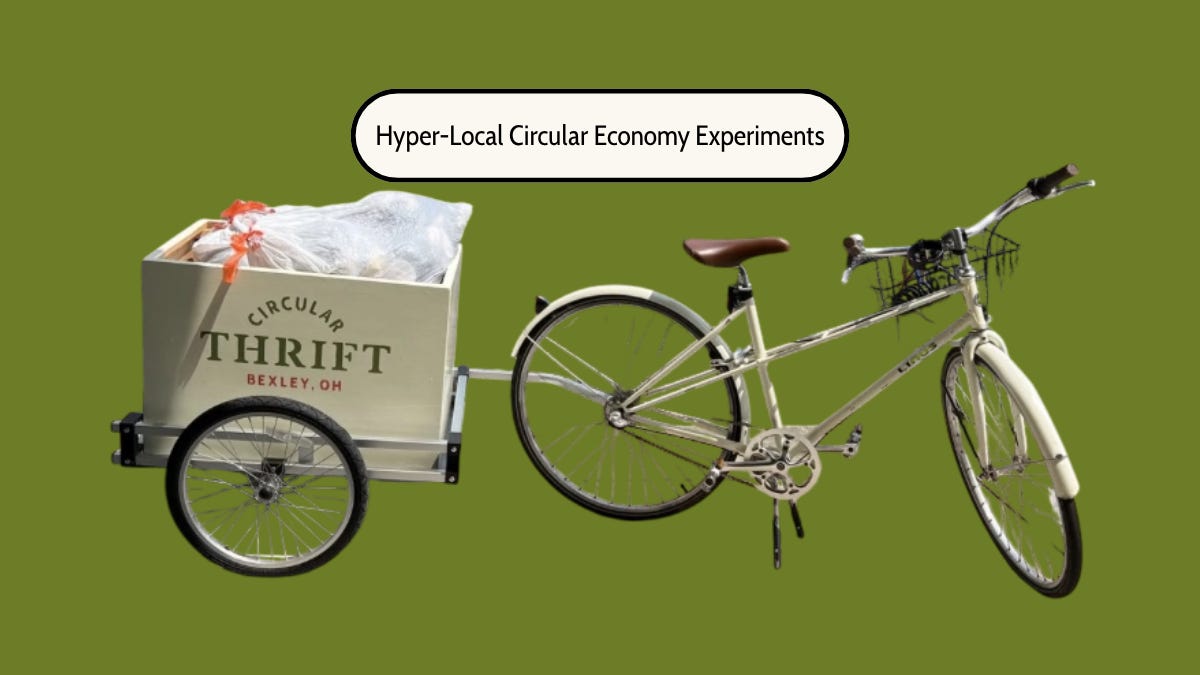
For three years, I conducted a hyper-local circular economy pilot out of my garage to see if we could keep clothing in a local value loop. My goal was to move beyond the theory of ‘circularity’ and prove that through a focused system of collection, resale, and repair, we could keep textiles in circulation significantly longer. I was just one person but I wanted to see if the mechanics of a small-scale system could offer a blueprint for something bigger.
It is one thing to contemplate doing something and quite another to go and do it. I made many mistakes and have reflected on SO many ways I wasted time and resources. But throughout this project I woke up feeling energized because I was ‘doing something’. People who I contacted or interacted with were intrigued by this more than anything else. Humans get that trying something new is hard. And interesting.
The Case for a Profit-Driven Hyper-Local Market:
I was unapologetic about seeking a modestly profitable way to do this. This is not because I don’t totally support the work of national nonprofits. I think that hyper-local engines of re-use should sit right next to and feed into national charities, perhaps even function as feeders to them. The work to do this however may not be free or entirely volunteer-led. I envision a vast market of hyper local actors. Starting in 2023 I played the part of a motivated hungry local actor.
Here is what I did:
I deliberately opened up collection. The bins which had previously solicited a specific thing (a halloween costume or damaged sweater) were now labeled to accept anything my fellow community members cared to hand along. I accepted drop offs at my house. I agreed to go to someone’s home to pick things up. Whenever feasible (weather and anticipated volume permitting), I collected via bicycle.
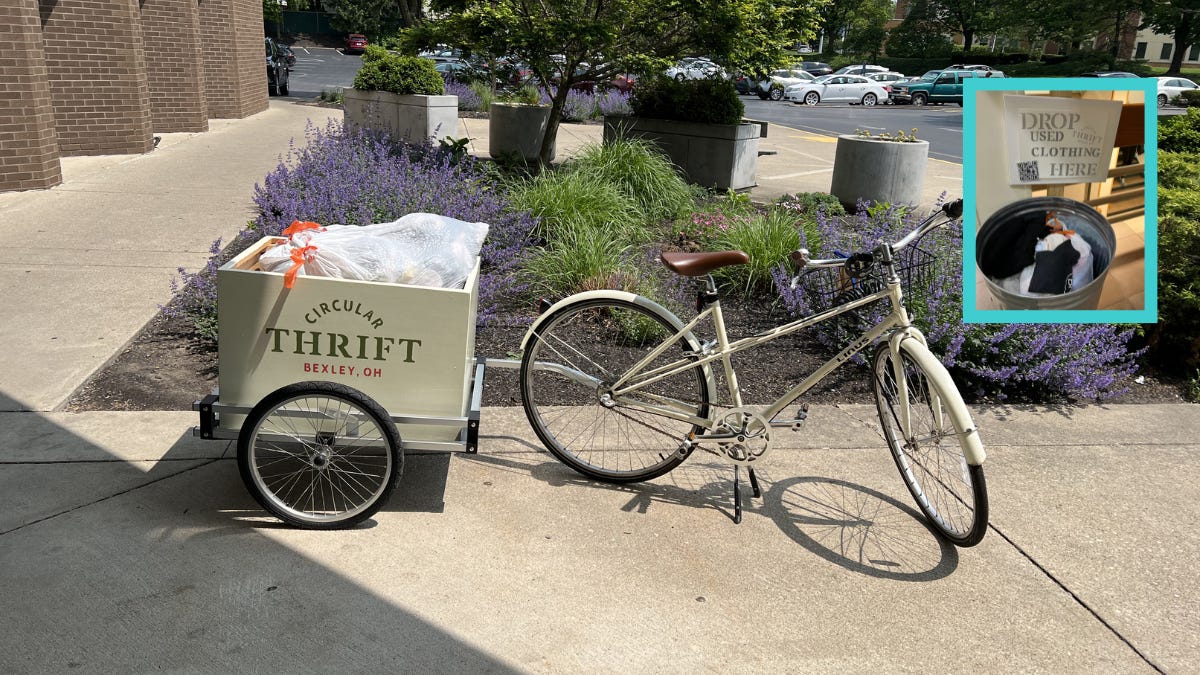
I collected whatever people wanted to shed, and see if I could hyper-locally (or worst case sustainably via online sale) re-circulate it. My biggest fear was that nothing would be given to me. Anyone who enters the post-consumer clothing ecosystem sheds that concern in about five minutes. There is so much stuff. It is suffocating. It’s that lovely iconic video of Lucille Ball and the chocolates on the conveyor belt. Who can possibly keep up?
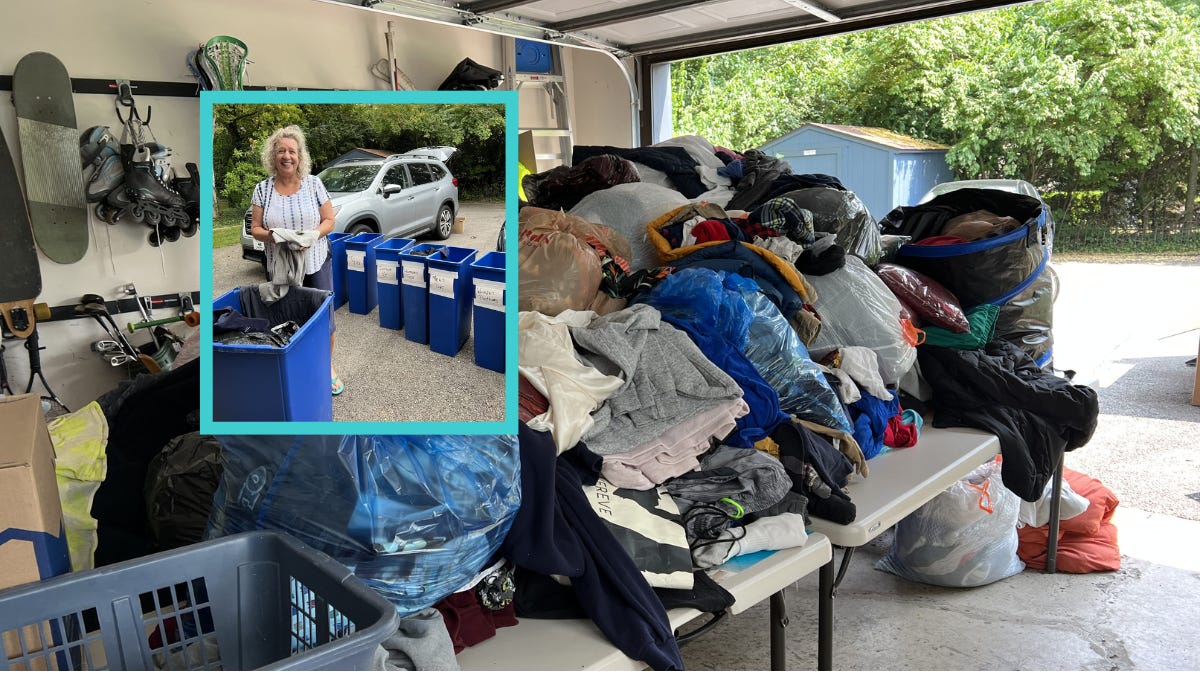
more details…
