

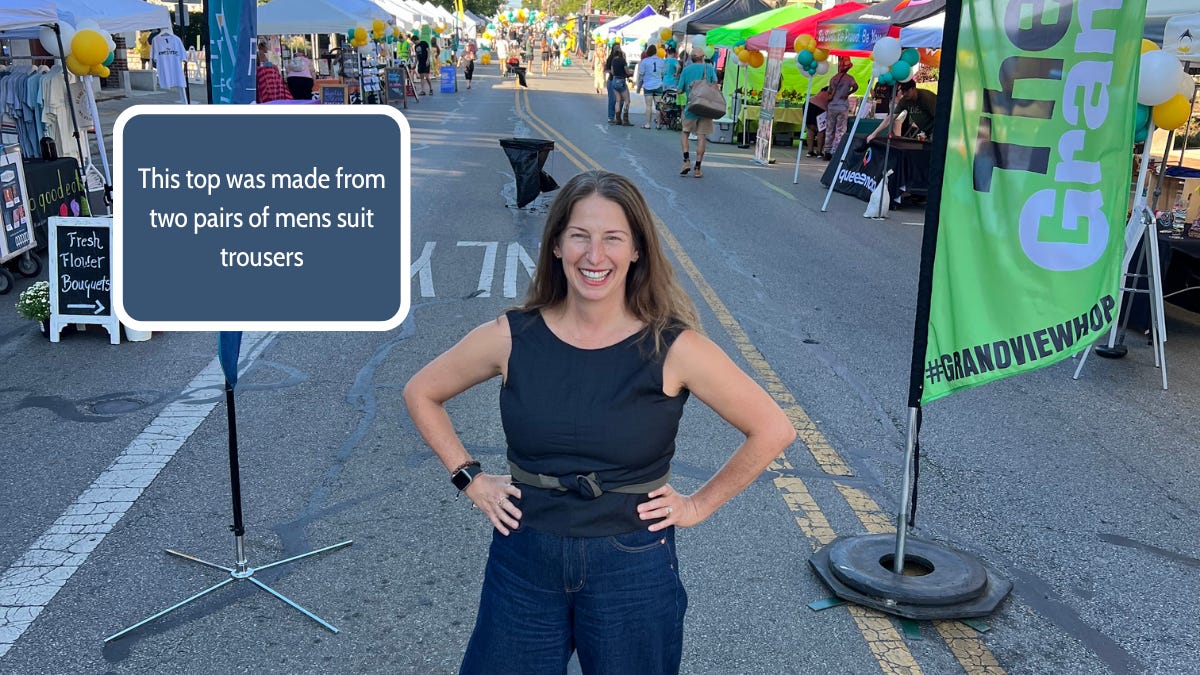
I keep coming back to that iconic scene in Sex, Lies, and Videotape where Andie MacDowell’s character, Ann, becomes adorably, helplessly obsessed with garbage. In 1989, Ann sits on her therapist’s couch pondering what will happen when society runs out of landfill space, sheepishly defending her sudden urge to stop buying things: “I used to love to shop, and now I just... I can’t. I mean, I’m only buying the things that are absolutely necessary, you know?”
According to projections from the Solid Waste Authority of Central Ohio (SWACO), the Franklin County Sanitary Landfill—my landfill—currently has about 40 years of remaining capacity. That means my grandkids won’t be able to rely on the solutions we currently have in place.
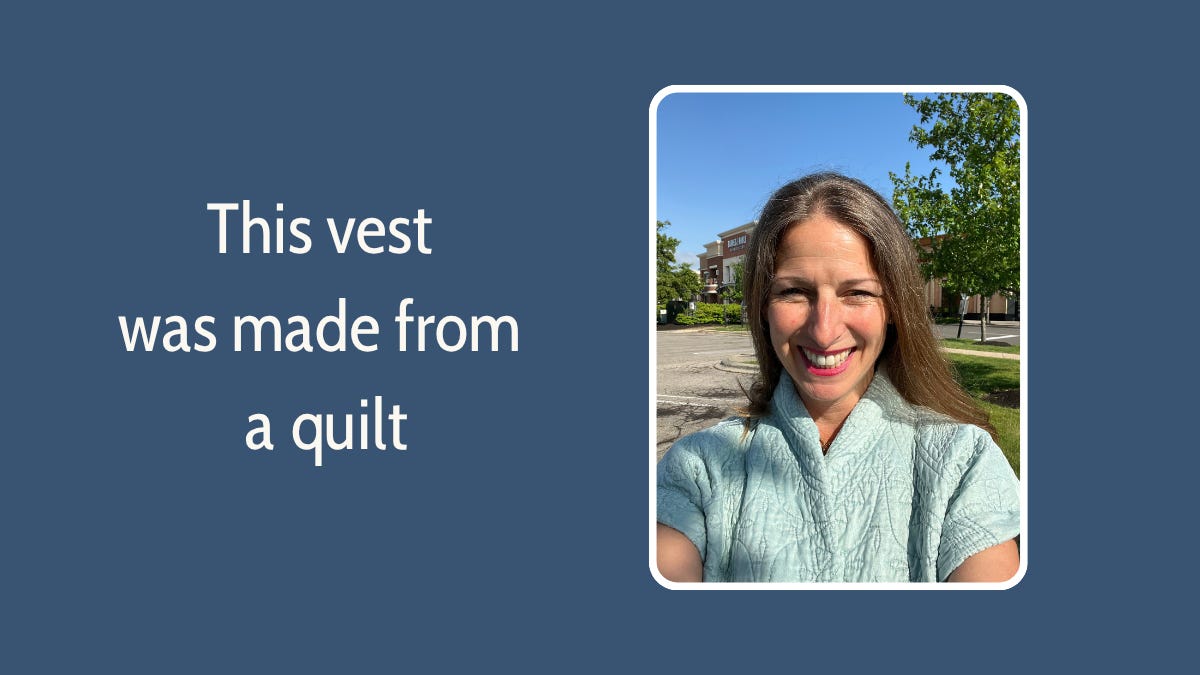
Reducing waste should be top of mind for all of us, but let’s not treat it as one more item on an unachievable world-repairing list—something we take breaks from by doomscrolling or holding our faces to the breeze of our dystopian present.
Instead, I want to think about this as a puzzle to solve. A creative conundrum from which we can’t avert our gaze.
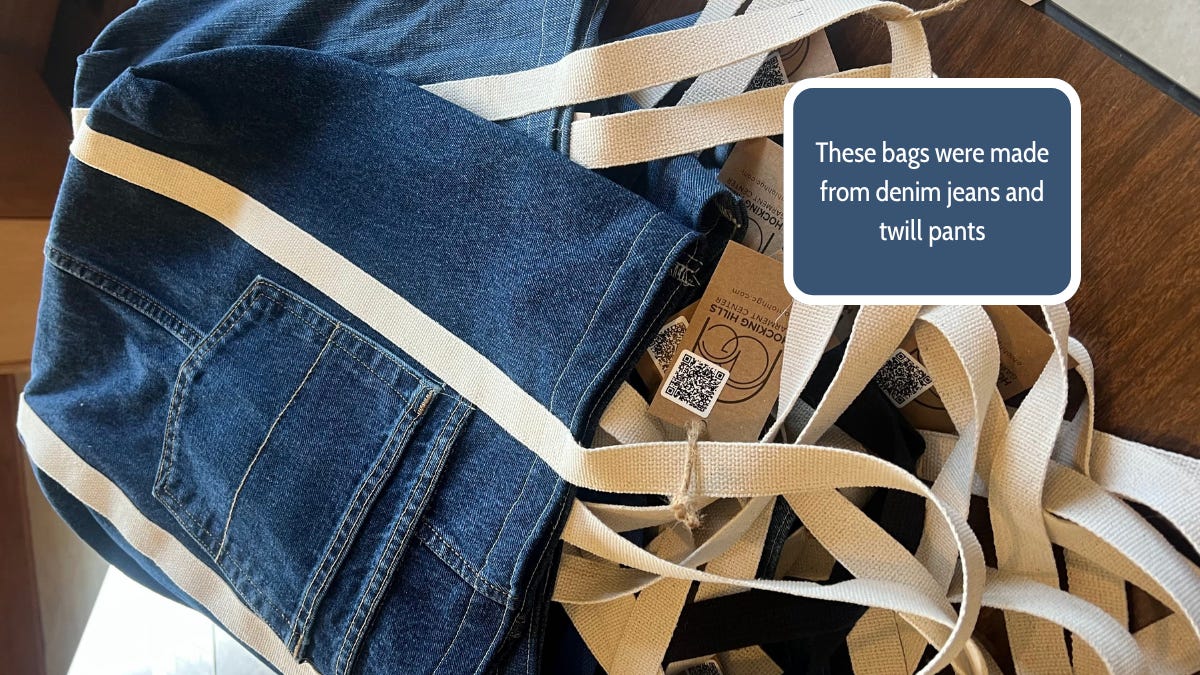
We talk a lot about circularity and designing for circular systems. I believe this concept is inherently sticky, creating genuine opportunities for creatives and entrepreneurs alike. But making it work requires a few disparate ingredients: solid design talent, a deep understanding of garment construction, and an uncompromising eye for what an aspirational lifestyle product actually looks like.
It also requires patience—and a little extra grit. The exact feedstock you want to design with isn’t sitting neatly on a bolt. It involves rolling with a tiny bit of “ick,” when one is sifting through “last chance” bins at a national charity outlet or picking through a second-hand market’s textile waste.
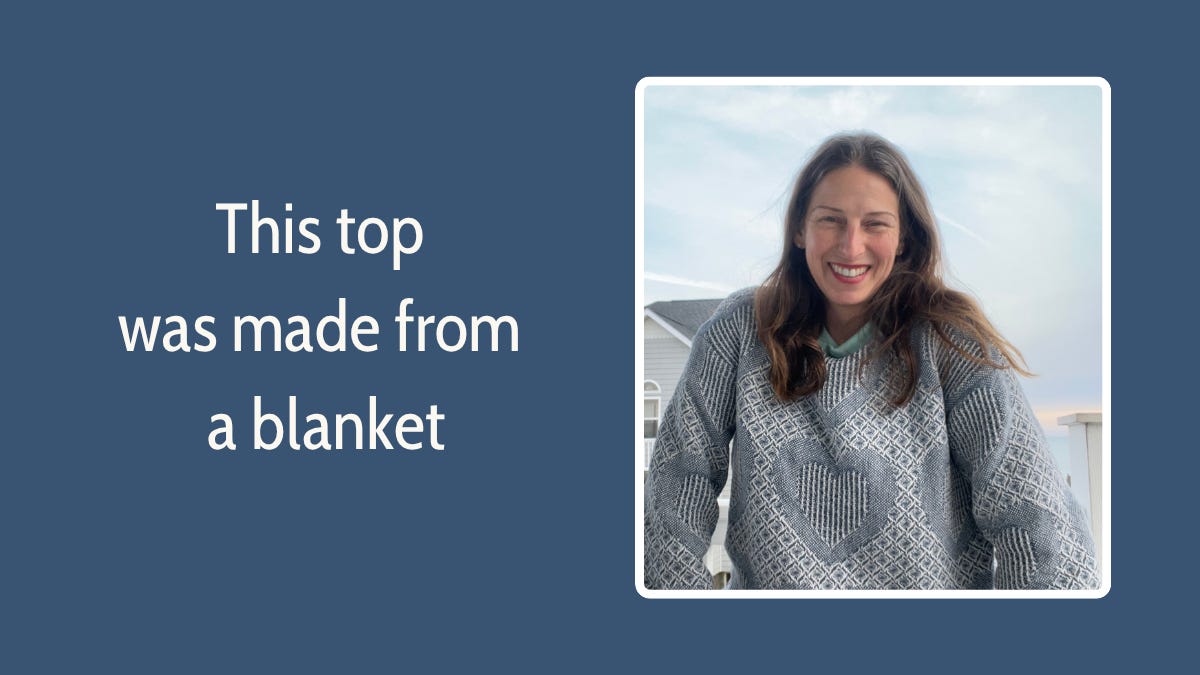
Circularity for textiles over the next decade will mean working with products that were never designed to be circular in the first place. I think about this constantly, and I love seeing how designers approach it. Some target the most addressable waste by volume—like high-quality fleece or knit tops blemished only by an unwanted corporate logo or someone else’s name. Others hunt exclusively for natural, high-value fibers. (A crafter recently contacted a SWACO employee asking if anyone wanted the 60 bags of cashmere sweaters she had accumulated over decades; the employee accepted them all and hosted a series of magical driveway cashmere giveaways).
For those of us who love clothing and understand construction, we can’t stand seeing a cashmere sweater that just needs a simple mend or a careful wash abandoned in a pile. We can’t leave it there. But, returning to Ann Bishop’s angst ridden monologue, even reclaimable materials pile up into a backlog without a clear system.
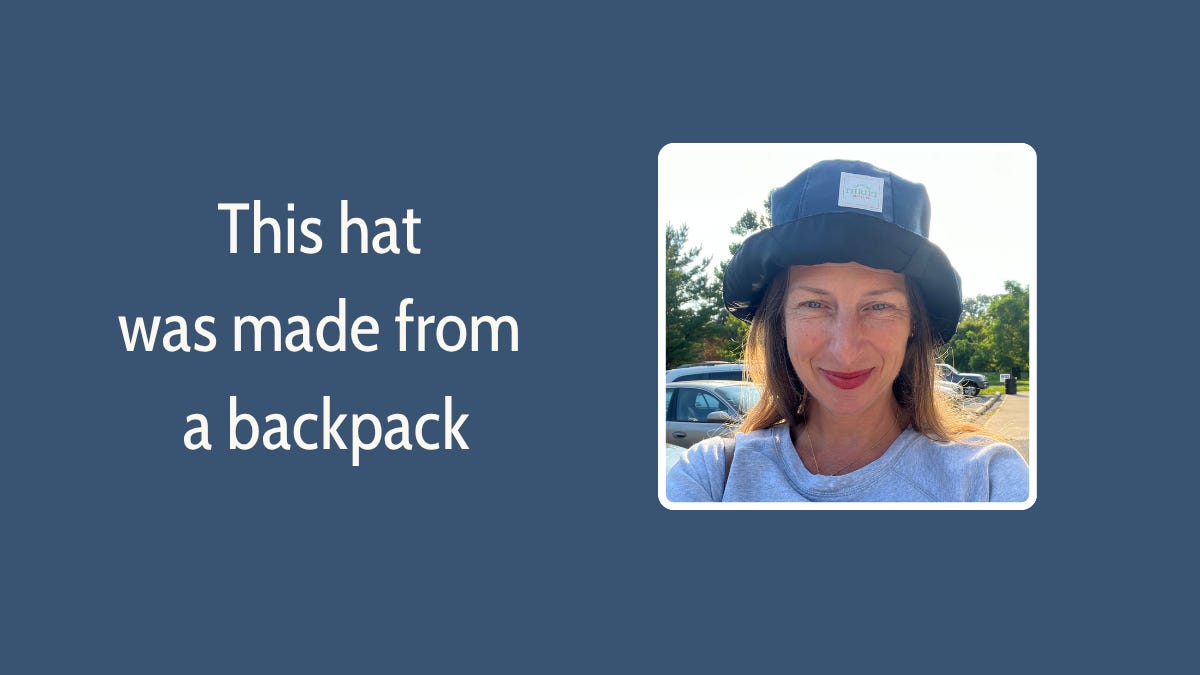
Still, we have to get excited about making cool things from “trash.” Squint at what is tangled together in the bins until we see the potential underneath. We need to get motivated by that quick 45-minute project that somehow becomes the best 5-hour project we ever spent two full days executing.
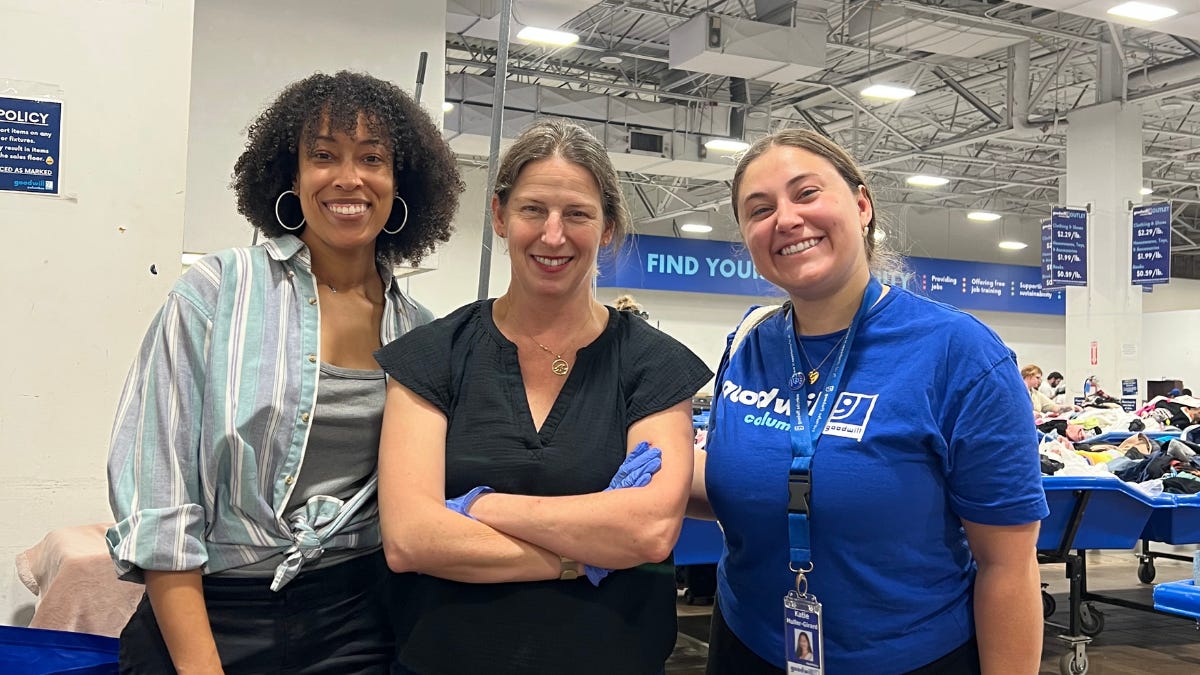
I have the great joy of counting as a friend Ayana Ames, a Cincinnati-based designer (Cincinnati’s landfill in Colerain Township has just 20 to 30 years left). Last month, we met at the Goodwill Bins in East Columbus to launch a collaboration with Goodwill Columbus. Ayana will be taking good-quality knits with unwanted logos, replacing the logo contaminated panels with contrast fabrics or new graphics, and demonstrating what a true design eye can do to turn “waste” into covetable capsule pieces.
Goodwill has been a perpetually curious partner in exploring how non-profit footprints can serve as future circular hubs. Considering that 82% of the U.S. population lives within 10 miles of a Goodwill store or donation center, their existing infrastructure could prove central to scaling post-consumer textile sorting—whether for industrial downcycling or closed-loop fiber to fiber recycling.
But moving several layers up the value pyramid brings us back to remanufacture. If 82% of us live near a thrift store, and roughly 30% of us belong to the “Creative Class” (designers, artists, engineers, problem-solvers), the potential for local ideation is massive. Over 50 million Americans engage in creative crafting, and up to 13 million are advanced sewists.
What if the new normal is that when inspiration strikes, our first instinct isn’t to drive to Michael’s or to Joann Fabric (those which are left) —but to travel 10 miles or less to our local second-hand store and build something cool from something in there?
What If We Started Here?
Three-part challenge:
Know your landfill: Find out where your local waste ends up and how many years of operational capacity it has left.
Make the swap: If you’re handy, substitute textile waste for new fabric in at least one project you take on this fall.
Vote with your wallet: Seek out and support a brand that actively uses remanufacturing in its business model
.